Judith Bingham: Four Minute Mile
Notes by Paul Serotsky (copyright 2002)
Although Nottingham-born, Judith Bingham grew up in Sheffield, so shell understand this bluff Yorkshiremans divulging of her age by way of introducing her (to anyone requiring an introduction) as a seasoned campaigner rather than a Janey-come-lately! As an active composer even before her composition studies at the Royal Academy, she was a natural with a distinctive voice - in both senses, having spent 13 years in the BBC Singers.
Chartres (1993) was her big break, precipitating a succession of commissions that brought her widespread international recognition - and a popularity that is at least partly due to her style, which might be dubbed compromisingly modern. However, equally significant is her eclecticism: inspirations and subjects ranging from the aforementioned cathedral to the Hubble telescope, and from ancient Egyptian writings to contemporary poetry, all bound by the same innate flair for musical drama and imagery.
Although her choral and orchestral works attract the most interest, Judith is accomplished right across the board. Considering her Yorkshire background, its hardly surprising that her output includes brass band works. Four Minute Mile is one such, written in 1991 and only later re-scored for symphony orchestra. Its inspiration, which also dictates the layout, is obvious from the title. A Short Sprint for Orchestra this may be, but its fair to say that the mile of the title is still by no means a sprint, even for the current world record holder (at the time of writing, this was Hicham El Guerrouj, July 1999, 3 minutes 43 seconds).
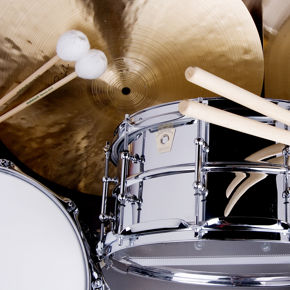
The instruction, Sprinting away with great vigour, is evident right from the starting pistol, which perhaps should have been marked With blank expression (but wasnt). The pervasive, muscular rhythmic drive relaxes - somewhere around the end of the second lap - for a melodic passage featuring trumpet and tuba, with a packed field of percussion maintaining the pressure on these leaders. Naturally, a bell signals the start of the final lap and the thrill of the race for the tape.
This neat little conception is something of a latter-day equivalent of the Ruslan and Ludmilla Overture. Like the world mile record ever since that famous first-recorded sub-four minute run by Roger Bannister on 6 May 1954, every now and then a performance will come along which clips a bit off the previous fastest. So, get out your stopwatches - you never know . . .
(The author gratefully acknowledges the generous assistance of Giles Easterbrook (Maecenas Music) and Chris Houlding, for providing information used in the preparation of this note). https://musicweb-international.com/programme_notes/bingham_mile.htm